The Importance of Getting Your Pet Vaccinated: Essential Dog and Cat Vaccines
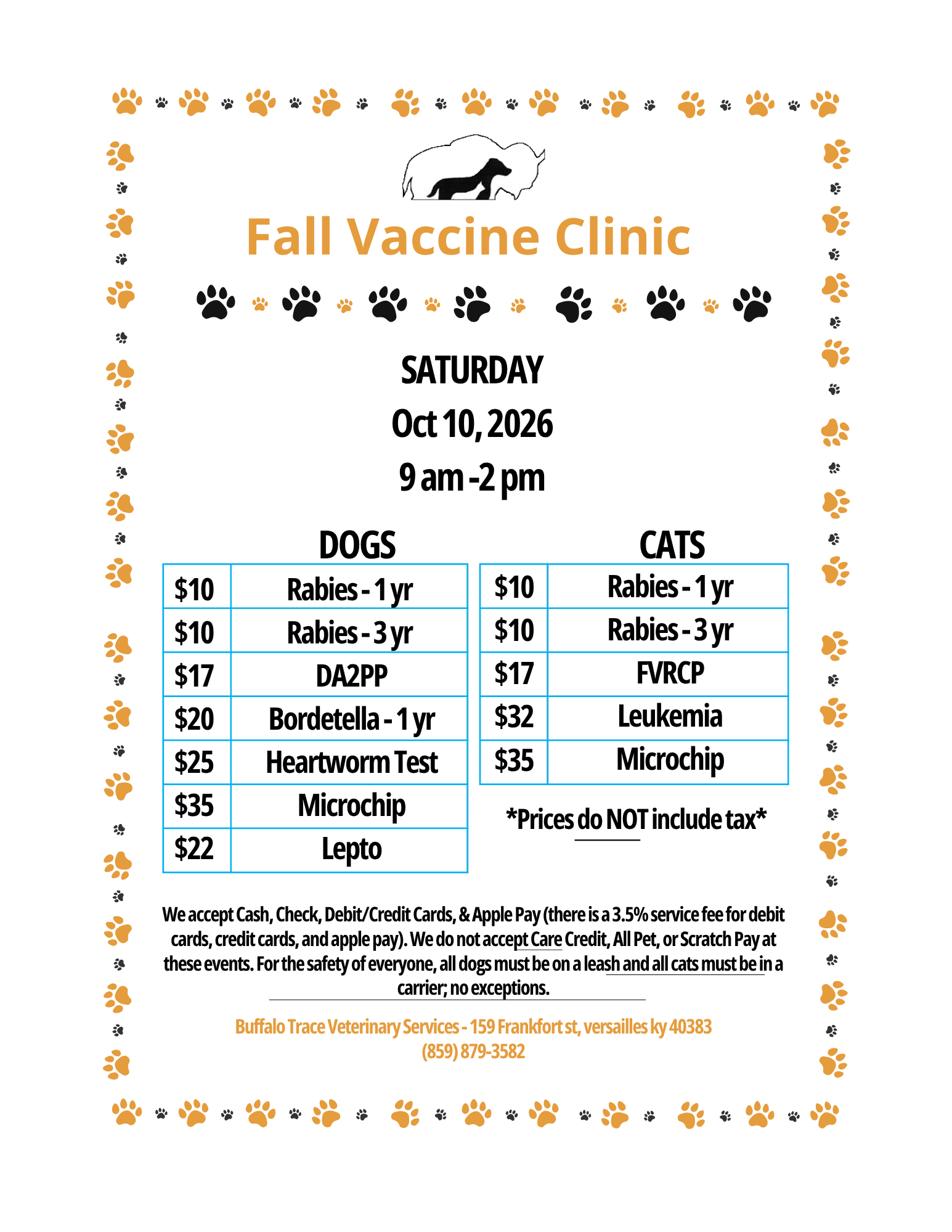
At Buffalo Trace Veterinary Service, we treat your pet like our own — and that starts with prevention. Vaccinations are one of the simplest, most affordable ways to protect your dog or cat from serious (and often deadly) diseases. As a family-owned clinic in Versailles, KY, we’ve seen firsthand how a routine shot today can save you a heartbreaking emergency visit tomorrow.
Whether you just brought home a wiggly puppy, adopted a senior cat, or it’s been a while since your pet’s last visit, this guide walks you through what every dog and cat owner in Woodford County should know about vaccines.
Why Pet Vaccinations Matter for Dogs and Cats
Vaccines work by training your pet’s immune system to recognize and fight off specific diseases before they can take hold. Without them, dogs and cats are vulnerable to illnesses like rabies, parvovirus, and feline distemper — conditions that are often expensive to treat and, in many cases, fatal.
Beyond protecting your individual pet, vaccinations also protect the broader community. When most pets in an area are vaccinated, it becomes much harder for diseases to spread — the same “herd immunity” concept you’ve probably heard about in human medicine. And in the case of rabies, vaccinating your pet protects your family, too, since rabies can pass from animals to people.
The bottom line: vaccines are preventative medicine at its best. They cost a fraction of what treating these diseases would, and they give your pet the best shot (no pun intended) at a long, healthy life.
Core Dog Vaccines That Help Protect Long-Term Health
The American Animal Hospital Association (AAHA) considers a handful of vaccines “core” for dogs — meaning every dog should have them, regardless of lifestyle. Here’s what we recommend for our canine patients near Versailles, KY.
Rabies Vaccine for Dogs: 1-Year and 3-Year Protection Options
Rabies isn’t just important — it’s required by Kentucky law. After your puppy receives their first rabies vaccine (typically around 12–16 weeks old), they’ll need a booster a year later. From there, you can choose between a 1-year or 3-year rabies vaccine, depending on your dog’s age and health history. We’ll help you decide which schedule makes the most sense at your visit.
DA2PP Vaccine for Dogs: Distemper, Hepatitis, Parainfluenza, and Parvovirus Protection
DA2PP is the workhorse of canine vaccines — a single shot that protects against four serious diseases:
- Distemper: A viral disease that attacks the nervous, respiratory, and gastrointestinal systems. Often fatal.
- Adenovirus (Hepatitis): Causes liver damage and can be passed through bodily fluids.
- Parainfluenza: A respiratory virus that contributes to “kennel cough.”
- Parvovirus: A devastating, highly contagious disease that hits puppies especially hard. Without prompt treatment, parvo is often deadly.
Most dogs receive DA2PP boosters as puppies, then again at one year, with follow-up boosters every one to three years depending on their risk profile.
Bordetella Vaccine for Dogs: Why the Kennel Cough Shot Matters
If your dog spends time around other dogs — boarding, grooming, daycare, dog parks, training classes — they need protection from Bordetella, the bacteria most commonly behind kennel cough. While kennel cough usually isn’t life-threatening for healthy adult dogs, it’s miserable, contagious, and can turn into something worse for puppies, seniors, or dogs with underlying conditions. Many boarding and grooming facilities require proof of a current Bordetella vaccine before they’ll accept your pet.
Leptospirosis Vaccine for Dogs: Why the Lepto Shot Is Important
Leptospirosis is a bacterial infection your dog can pick up from contaminated water, soil, or contact with wildlife — and Kentucky’s creeks, ponds, and rural landscapes mean local dogs face real exposure. Lepto can cause kidney and liver damage, and it can also spread to people, which makes it a serious concern for the whole family. We recommend the lepto vaccine for most dogs in our area, especially those who spend time outdoors, hike, swim, or live near wooded property.
Core Cat Vaccines That Help Protect Long-Term Health
Cats need preventive care just as much as dogs do — even if they’re strictly indoor pets. Here are the vaccines we recommend for the feline members of your family.
Rabies Vaccine for Cats: 1-Year and 3-Year Protection Options
Like dogs, cats are required by Kentucky law to be vaccinated against rabies. Even indoor-only cats can be exposed (a stray bat in the attic is more common than you’d think), so this one isn’t optional. After the initial kitten dose and one-year booster, we offer both 1-year and 3-year options.
- FVRCP Vaccine for Cats: Protection Against Feline Distemper, Calicivirus, and Herpesvirus
- FVRCP is the feline equivalent of DA2PP — one shot that protects against three serious viral diseases
- Feline Viral Rhinotracheitis (Herpesvirus): A common cause of upper respiratory infection in cats.
- Calicivirus: Another respiratory virus that can also cause painful mouth ulcers.
- Panleukopenia (Feline Distemper): A highly contagious and often fatal disease that attacks the immune system, similar to parvo in dogs.
Kittens get a series of FVRCP shots, then boosters as adults at intervals we’ll work out together based on their lifestyle.
- FVRCP Vaccine for Cats: Protection Against Feline Distemper, Calicivirus, and Herpesvirus
- FVRCP is the feline equivalent of DA2PP — one shot that protects against three serious viral diseases
- Feline Viral Rhinotracheitis (Herpesvirus): A common cause of upper respiratory infection in cats.
- Calicivirus: Another respiratory virus that can also cause painful mouth ulcers.
- Panleukopenia (Feline Distemper): A highly contagious and often fatal disease that attacks the immune system, similar to parvo in dogs.
Kittens get a series of FVRCP shots, then boosters as adults at intervals we’ll work out together based on their lifestyle.
Feline Leukemia Vaccine for Cats: When the FeLV Vaccine Is Recommended
Feline leukemia virus (FeLV) is one of the leading infectious causes of death in cats. It spreads through close contact — sharing food bowls, mutual grooming, bites — which means outdoor cats and cats in multi-cat households face the highest risk. We strongly recommend the FeLV vaccine for kittens and any cat that goes outside or could come into contact with cats of unknown status. For strictly indoor adult cats with no exposure risk, it may be optional. We’ll help you make the call.
How Often Do Dogs and Cats Need Vaccines?
The honest answer: it depends on your pet. Age, health history, lifestyle, and which specific vaccine we’re talking about all factor in. Generally speaking:
- Puppies and kittens need a series of shots, usually starting around 6–8 weeks of age and continuing every 3–4 weeks until they’re about 16 weeks old.
- Adult dogs and cats typically need boosters every one to three years, depending on the vaccine.
- Senior pets still need protection, but we’ll tailor the schedule to their specific health needs.
Rather than guessing, the easiest move is to come in for an annual wellness exam. We’ll review what your pet has had, what they’re due for, and build a schedule that fits both their needs and your budget.
What Vaccines Do Puppies and Kittens Need First?
Bringing home a new puppy or kitten is exciting — and a little overwhelming. The good news is the early vaccine schedule is well-established, and we’ll walk you through every step.
For puppies, the typical starter series includes:
- DA2PP, beginning around 6–8 weeks and boosted every 3–4 weeks until 16 weeks
- Rabies, given around 12–16 weeks
- Bordetella, especially if socialization classes or boarding are in their near future
- Leptospirosis, based on lifestyle and local exposure
- For kittens, the typical starter series includes:
- FVRCP, beginning around 6–8 weeks and boosted every 3–4 weeks until 16 weeks
- Rabies, given around 12–16 weeks
- Feline leukemia, especially for kittens that will go outside or live with other cats
Your puppy or kitten’s first visits are about more than just shots — they’re a chance for us to catch any early issues, talk about nutrition, and start building a long-term relationship with your newest family member.
When to Schedule Your Pet’s Next Vaccination Visit
The best time to schedule is before your pet is overdue. If you’re not sure where your dog or cat stands, give us a call and we’ll pull up their record (or help you start one if they’re new to us). Annual wellness visits make it easy to stay on track without having to keep a calendar of every shot.
Buffalo Trace Veterinary Service has been a trusted vet clinic near Versailles, KY since 2013. We’re family-owned, locally focused, and committed to providing affordable, compassionate care to dogs and cats throughout Woodford County and the surrounding areas — including Midway, Frankfort, Lawrenceburg, and Lexington.
Call us at (859) 879-3582 or fill out our contact form to schedule your pet’s next vaccination visit. We’re located at 159 Frankfort Street in Versailles, Kentucky — and we’d love to welcome your pet into our family.
Pet Vaccination FAQ
A. Vaccinations protect your dog or cat from serious, sometimes fatal diseases like rabies, parvovirus, and feline distemper. They’re far cheaper and less stressful than treating these illnesses after the fact, and they help safeguard the broader pet community from outbreaks.
A. Most dogs need DA2PP, a rabies booster (depending on schedule), and Bordetella if they’re around other dogs. Many dogs in our area also benefit from an annual leptospirosis booster. We’ll build a schedule based on your dog’s specific lifestyle and risk factors.
A. DA2PP is a single combination vaccine that protects against four diseases: distemper, adenovirus (hepatitis), parainfluenza, and parvovirus.
A. Yes. DA2PP includes protection against both canine distemper and parvovirus, two of the most serious viral diseases dogs can face.
A. The Bordetella vaccine protects against the bacteria most commonly responsible for kennel cough. We recommend it for any dog that boards, goes to daycare, visits the groomer, or spends time around other dogs.
A. For most dogs in central Kentucky — yes. Leptospirosis spreads through contaminated water and wildlife, and our region’s creeks, ponds, and rural settings put many dogs at real risk. It’s also one of the few pet diseases that can pass to humans, which makes it doubly worth preventing.
A. After the initial puppy vaccine and one-year booster, dogs can be on either a 1-year or 3-year rabies schedule. We’ll help you decide which is right based on your dog’s age, health, and Kentucky’s legal requirements.
A. Core cat vaccines include rabies and FVRCP (feline distemper, calicivirus, and herpesvirus). Feline leukemia is also strongly recommended for kittens and any cat that goes outside or lives with other cats.
A. FVRCP protects against three viruses: feline viral rhinotracheitis (herpesvirus), calicivirus, and panleukopenia (feline distemper).
A. Yes — the “P” in FVRCP stands for panleukopenia, which is the technical name for feline distemper.
A. We recommend the FeLV vaccine for all kittens, outdoor cats, and any cat that lives with or could be exposed to other cats of unknown FeLV status. For strictly indoor adult cats with no exposure risk, it may be optional.
A. Like dogs, cats start with a kitten dose and a one-year booster, then move to either a 1-year or 3-year schedule. Kentucky law requires cats to be vaccinated against rabies, even indoor-only cats.
A. Puppies typically start their DA2PP series around 6–8 weeks and continue every 3–4 weeks until about 16 weeks of age. They also receive their first rabies vaccine between 12 and 16 weeks. Depending on lifestyle, Bordetella and leptospirosis may be added.
A. Kittens typically start their FVRCP series around 6–8 weeks and continue every 3–4 weeks until about 16 weeks of age. They also receive their first rabies vaccine between 12 and 16 weeks. Feline leukemia may be added based on lifestyle.
A. Yes. If your pet missed a vaccine or is overdue, give us a call — in many cases we can simply restart or catch up the schedule without starting from scratch. The most important thing is getting them protected again.
A. The easiest way is to schedule an annual wellness exam. We’ll review your pet’s records and let you know exactly what they need. If you’re unsure, just call us at (859) 879-3582 and we can check.